

Why Malta License is Losing Its Relevance + Building a Regulated Operator in North America
with Benjamin Truman, Founder of AbsoluteBet
- EvoVerse

- Blokotech

Credited on the iGaming Real Talk podcast episode. Not advertising on this site.
In episode 44 of iGaming Real Talk, Benjamin Truman, Founder of AbsoluteBet, shares interesting insights from building a fully regulated gaming operator in North America.
From company setup in 3 days to securing licenses in just 2 months, Ben breaks down:
- Why building everything in-house (instead of white label) was the only option in regulated markets
- The brutal reality of North American licensing, politics, lobbying and the "good old boys club"
- The revolutionary "Live Person Casino" concept featuring celebrities and athletes
- Why live casino tables outperform slots in North America
- Why Malta licenses are losing relevance fast as countries go local
- UK overregulation pushing operators offshore and killing the black market
- Canada's smart approach vs. US sweepstakes and prediction market chaos
- Insider trading risks, $3B valuations, and the future of prediction markets (Polymarket)
- The 3 truly recession-proof industries
A must-watch for operators, affiliates, and anyone entering regulated iGaming markets in 2026 and beyond.
Key takeaways
- Declining Malta License Relevance. As more jurisdictions move toward local licensing models, the traditional Malta license is rapidly losing its utility for operators seeking to enter regulated markets.
- In-house vs. White Label. Building proprietary technology stack is essential for operators in strictly regulated markets rather than relying on third-party white label solutions.
- The Rise of Live Person Casinos. The 'Live Person Casino' concept, which leverages celebrities and athletes, is proving to outperform traditional slot machines in the North American market.
- Regulatory Landscapes Comparison. Canada’s structured regulatory approach offers a stable contrast to the current volatility and legal ambiguity seen in US sweepstakes and prediction markets.
- Barriers to Entry in North America. Entering the North American market involves navigating complex political landscapes, intense lobbying, and a challenging 'good old boys' club' environment.
Notable quotes
Malta licenses are losing relevance fast as countries move toward local, sovereign regulation.
The North American market requires a total shift away from white-label dependencies toward robust, in-house technical infrastructure.
Live casino tables are significantly outperforming traditional slot machine formats in North American engagement.
About the guest
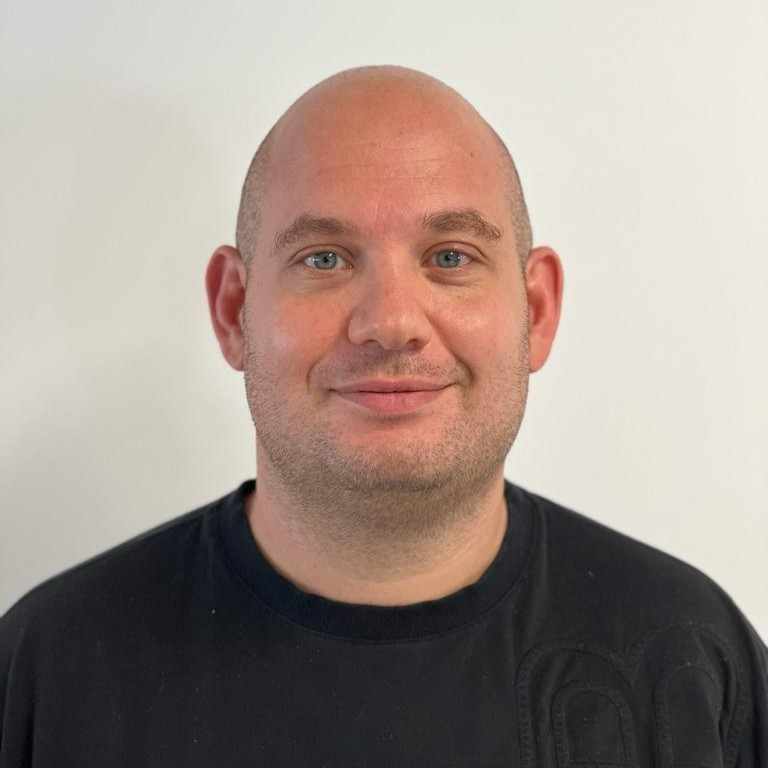
Benjamin Truman
Founder of AbsoluteBet
Benjamin Truman is the Founder of AbsoluteBet, an innovative gaming operator focused on navigating the complexities of regulated markets in North America. He is an expert in iGaming operations, license procurement, and the development of high-engagement live gaming experiences.
LinkedIn profileTranscript excerpt
A short passage published by the podcast, not the whole conversation.
Read the excerptHide the excerpt
- Surya Palli
Want to launch your gaming business fast? Company set up in just 3 days, and your license in just 2 months. Over 250 clients, 100% approval rate. Start legally with My Gaming License. Hello and welcome back to another episode of iGaming Real Talk. Today, I have Ben here with me. Ben and I know each other for a long time. I've been following him on LinkedIn. Ben, welcome to the show.
- Ben
Thanks for having me, mate. Thank you for the opportunity.
- Surya Palli
You know, we're going to speak a lot about regulated markets, as well as some of the latest topics that are trending within the industry. So, Ben, I remember we met a few years ago. I think I came in for an interview at Media Troopers like many, many years ago. Right? So, from then until now, how do you see the journey so far from like running a media kind of affiliate kind of business to now on the regulator operator side?
- Ben
Oh man, it's a world of difference. That's what I'll tell you. Building a media company is like building a house. Building an operator is like building a building. You know, it's so much more complicated than what anybody ever thinks it is.
- Surya Palli
Yeah. And you know, some of the discussions we had before the podcast itself, you mentioned that you've built everything in-house, right? So, why did you decide to build everything in-house and how did it go so far?
- Ben
Yeah. You know, you don't really get a choice in North America. You got two ways. You can either buy code, develop it yourself, build it yourself, or you can have a partner. So, we took a partner, but we've designed everything basically off their wireframe. And it is man, it's a journey. It's been a journey of 18 months, 2 years to get your BI program up, build your front end, develop your apps, make sure all your bonus and CRM.
Man, it's a much different world and really difficult. And I tell people that, you know, extremely difficult to build a regulated brand. I mean, it was hard 15 years ago, it's hard now.
- Surya Palli
Yeah, I mean, as we know, most of the operators take down the route of white label, right? It's the easiest, fastest, we can go live in a couple of months and be done with it. But, I think you've chosen the tough path just because of the regulation from what I'm hearing as well as the requirements of licensing.
So, if there is a couple of insights that you can share for the operators looking to enter similar markets in North America, what would they be in terms of the whole process?
- Ben
Bring talent. Bring people who know their job and let them do their job would be the first thing. You know, second thing is learn the landscape. In North America especially, it's very political. You want to go enter a market in North America and your name isn't Wynn or MGM or somebody else, you better have some real good connections and you better be able to lobby. Lobbying is probably the part that people don't really understand and see.
And you need to have good partners locally. You know, whether it's your lawyers, your accountants, just consultants that can help you out get through some of the bureaucratic landscape that we see, you know. It's a very bureaucratic area. I think the guys in Europe would even agree with that. A little bit more open in Europe than North America and even Canada. It's more of a what we would call a good old boys club and it's very difficult to break into that.
That's really the two things I would tell anybody. You know, make sure you have somebody who people that know what they're doing and make sure that you understand the landscape that you're trying to get into.
- Surya Palli
Mhm. Yeah, I mean, if we look at the wider iGaming space as well, it's something similar. It's hard to get in, but it takes years to build connections, to build relations as well as build that credibility and trust. So, I was also looking at the Absolute Bet website, and one of the things that caught my eye was live person casino, right? And I was wondering, like, what is this? Is this a new concept? Can you talk to us a little bit more about that?
- Ben
Yeah. I wouldn't call it a new concept. I would call it making the live casino more for the people. Through our contacts and entertainment and other places, we really wanted to figure out a UA strategy with live casino that would help us drive more players. You know, I think everybody's like, okay, how can I lower acquisition cost?
Well, one of the things that we've experienced in the past is like, look, having somebody come in, a celebrity who's playing blackjack at a table, it gives the people a better feel. So, we decided to call it live person. You know, and we want to take that idea to other studios and run them for, and have celebrities come in and people like this. And kind of taking this different idea of like, all right, how do we do acquisition and we push live casino?
Because most people don't know this, but live casino in North America is higher in some places than slots. It's more volume. Americans and Canadians like to play tables. And I think that's missed in data. I mean, people will disagree with me, but go to Vegas on a Friday night and the tables are full. You know? It's the truth.
So, we really wanted to focus live casino and then how do we bring in some of this network that I built over the past 15 years and make it more of a for the people type situation.
- Surya Palli
So, I mean, it's essentially kind of merging a live casino experience with celebrity experience in a way. So, is it kind of better than lonely mobile gaming sort of?
- Ben
Listen, Vegas sells itself on entertainment. You know, we are in the entertainment business. You know, we worked with the university when we were going through and getting the center started. I said, "This isn't gambling. It's entertainment." And I think that's in the industry, that's where we lose a lot. Everybody's about profitability. Everybody's about this and that. But at the end of the day, what are we selling? We're selling entertainment.
And that's where we wanted to look when building this brand out is how we can we make it more entertainment-wise. You know, one of the things that we just did was we integrated a brand new game that is absolutely insane called CCTV. And it's stuff like that. It's entertainment. You know, how many Gates of Olympus are there? Or, you know, Starburst. You know, there's a hundred different copies. It's not entertainment now. It's just how can I fix my bottom line?
And I think we kind of lost that. So, to bring that back in, that's how we wanted to build the brand around selling entertainment to people because that's what we sell.
- Surya Palli
Yeah, and you know also online brands always have trust issues, right? Like the new online operators. So, bringing in the big names like MGM and other brands, are you also trying to create instant trust because these brands are known for forever, right?
- Ben
It's exactly. They bring reputability, you know, with some of the guys we're talking to or going to stop in and do some things with us. People feel comfortable. They know them. And everybody knows MGM or Wynn or somebody like this and you trust them just because of who they are. Even though you probably shouldn't at the end of the day. Everybody's the same. We're all the house. So, yeah, it will definitely bring the credibility.
You know, brand awareness, credibility, and reputation, which is very important.
- Surya Palli
This is very interesting concept in a way because it's something new from what we see in Europe as well as what's going on in the other areas. So, it's going to be interesting to see the developments. Are you already working with some brands that you can name or how's it?
- Ben
No, I can't name anybody yet. But, soon we will. But, we'll see. The hardest part is getting the entertainment guys on the side. You know, getting them to understand like, "Okay, this is okay. It's safe to do. We're regulated casino. It's good."
- Surya Palli
Celebrities?
- Ben
Yeah, the entertainment guys. Celebrities or athletes, you know, there's a lot of questions around that. I have a lot of friends in Brazil who for many years companies would approach them and be like, "Sponsor, be our sponsor." And I would say to them, "No." Like, you never know how it's going to end up and sure enough, we saw what happened when the Brazilian market went regulated and a lot of influencers got taken down.
- Surya Palli
Cool. I mean, I look forward to seeing the updates as well as how it goes on because it's quite interesting and quite new and unique.
- Ben
Yeah, definitely. It's an experience. That's all I'll say. Definitely an experience.
- Surya Palli
Let's talk about the licensing for a bit. Say, we know from the talks behind the scenes as well that it took almost a year and a half to 2 years for the whole licensing part. So, what do you think in terms of operators, if we look at the licensing landscape globally, where do you think an operator should be licensed for them to position for credibility?
- Ben
Oh, man. In today's world, you're looking at some of the higher regulated markets, North America, UK. UK is probably the example today of overregulation in a sense. But, you know, you're looking for where there's local regulation, local jurisdictions. Those come with more power than the other ones we have even though they're still around, but, you know, you see country-by-country kind of closing that down. New Zealand, Finland, Ireland were the three latest ones.
I mean, you have Alberta coming in the middle of the summer. I think the one thing that Canadians have done a very good job of is killing a black market in Ontario. And they'll do the same thing in Alberta.
- Surya Palli
Oh, yeah, they've done a great job.
- Ben
And they did things that I think were smarter, not everything they did was smart, but a lot of what they did was very intelligent, you know. Making it harder for affiliates who aren't following the rules. You're not allowed in. You made it so that it was too expensive for some of the gray market operators to come in and you really made people make a choice.
Whether you wanted to go left or right and I think in that sense they did a very good job of cannibalizing the black market. Whereas if you look at certain other jurisdictions you just go south of the border of the US you have sweepstakes, prediction markets, which both we could claim are gray, and then you have Bovada and Bodog who their numbers haven't been better. They've grown substantially since regulation. Why?
Because the government and the regulators necessarily haven't dealt with it or don't want to deal with it.
- Surya Palli
If we look at UK and also if you look at the Netherlands which is doing a lot of things in the European regulated market. And if we look at other jurisdictions like if you look at Europe in general, how do you think the licensing landscape is evolving because with Netherlands and with UK making the headlines every single week with harder and tougher regulations, are we going to see more operators wanting to go towards offshore licenses?
- Ben
I mean, you're already seeing it in the UK. I mean it's not a day that goes by that you don't hear of another UK operator company looking to sell. And you know, what was the first thing when the taxes got raised, you know? Alarm bells went off and black market blew up. And that was kind of to be expected. You know, where you're using offshore license to operate. And when you raise taxes as high as they did over regulation, over taxation, that's what happens.
You build, you bring back the black market.
- Surya Palli
But, Ben, which makes me wonder, UK is one of the most mature markets in our space. So, why do you think that they had to go down that route? Is it ignorance or is it lack of care?
- Ben
I think it's a double-edged sword. I think first of all, the industry has a problem in the fact that we're really crappy at lobbying. Like overall, the industry and I'm speaking from a North American angle, we're not a strong lobby. We don't lobby very hard. And when we do, you know, look, you want to look at the UK law, look at the racetracks. The racetracks weren't hit by this raising taxes. Why? Because they're very strong lobbyists in the UK.
Well, online gambling kind of we have this thing where nobody really wants to work together. So, when you're lobbying, you're going to find it very difficult. You see less of this in the States because you will see the guys work together more and try to lobby. But now you have those days look like they're behind us with everybody moving to Polymarket and prediction markets. But I think that's number one. And number two, it's ignorance.
You know, working with the university, working with the state of West Virginia, that was the first thing I had to overcome was the ignorance. And it was not ignorance in the sense that you didn't understand what we do. It's an ignorance that if you over-regulate this market, you will just push people away. And then where will they go? They'll go to somewhere where there's a Costa Rica license.
And then you know, and people don't understand what that means, but you have no recourse. You put in a million dollars, you lose a million dollars, you lose a million dollars. If they run away with it, they run away with it. And I think both those things in conjunction had caused a lot of problems where you find this over-regulation and governments think it's a piggy bank. You know, and we have that problem.
They think gambling is a piggy bank and you can give us more money without understanding the ramifications and I think you're already seeing it in the UK with businesses pulling out, people surrendering licenses. Okay, you'll be left with Bet365 and so, you know, William Hill doesn't exist anymore. Bet365 and, you know, you got a couple of other brands there.
- Surya Palli
I saw some news that they are also planning to move somewhere.
- Ben
Moved their headquarters to Malta. I live in Malta, so across the street from my house is a brand new Bet365 headquarters. They relocated a couple thousand employees to the island. But they're not the last one. You're just going to continue to see this exodus out of the UK. You'll be left with four or five books who can actually afford to do it. So, you're already seeing it with Cheltenham.
You know, you're talking one of the biggest horse races in the world and the biggest sponsor for them for years was Entain. Years, decades, they're not sponsoring this year.
- Surya Palli
Going back to the Canada topic. You mentioned that they did a very good job in terms of making sure that the black market doesn't exist or somewhat similar. Shouldn't UK do the same thing before actually raising the taxes?
- Ben
They already went the opposite. Most regulators do this, by the way. They come down on the marketing side, which if you want to force the gray market out, let's call it charcoal. If you want to get them out, don't tackle the marketing side of it. Tackle the other things.
- Surya Palli
Why is Brazil doing the same thing? I heard something that there's going to be restrictions about sponsorships and branding in sports from May 2026 or something like that.
- Ben
Brazilians, having friends in Brazil and talking to people down there, completely different world. Why do they do it? Because they think they should do it. They think it's, look, we have another problem in this industry. We sometimes don't know how to stop ourselves. There was that first 2 years of US open market in sports betting, man, every commercial was FanDuel, DraftKings, MGM, Twin Spires back then, and Wynn. And really you had a backlash grow.
And I think there's a fine balance here. Should you be targeting children? No. Should you be targeting people with cartoon animals? No. Should I be able to advertise at a sporting event? Yes. Should I be able to show ads at night time? Yes. Should I show ads on Mickey Mouse Club? No. And I think there's a fine line and part of our problem is we sometimes go over the line. And we have to reel that in. But once again, that goes back to the whole industry that there's no lobby.
There's no centralized lobby in gambling that says, "Here are the rules. Here's what we're going to do." And every time somebody's tried to do it in gambling, it's fallen apart. Because that's just not the nature of the business.
- Surya Palli
Just to close off this discussion about licenses, what do you think is going to happen to traditionally famous licenses like Malta?
- Ben
Oh, Malta's dead. I mean it had a good life.
- Surya Palli
Kind of like a Rolls-Royce, right?
- Ben
Yeah, for a long time it was great. It was a wonderful license to have to operate, but you hear people trying to sell them, they're not really worth anything today. Because you're coming up with local licenses from all the countries, and those local licenses supersede the Maltese. Having a Maltese license now doesn't mean you can operate in Germany as you could for all those years.
Italy's been closed forever, same thing with Spain and Portugal, but you know, places like Malta will find it harder. I think you're going to find it harder in Canada. Alberta for Tobique and Kahnawake, I mean, they'll still have their offshore side, but it will be tougher and tougher.
- Surya Palli
When it comes to US as well, one of the things that is really trending is we have sweepstakes, social casinos, and now prediction markets. If we look at sweepstakes and social casinos, do you think there is still opportunity for operators to go into these things in the US market or do you think it's a slow death?
- Ben
Yeah, it's a slow death. I think you got 16 or 17 states that already kicked them out. You'll have more. But the funny thing is if you go back the same question we had with sweepstakes they used to have with DFS. Now sweepstakes, there's prediction markets. So nobody even looks at sweepstakes now. You go through LinkedIn it's like every day it's Kashi versus Massachusetts or Kashi versus California.
So now all the focus went from sweepstakes over to these guys, but on the sweepstakes side it's a little bit scarier because you're seeing class action lawsuits. You have a RICO lawsuit in California against Drake and Stake. They named the stake owner, stake.us, which is a sweepstakes. Or if you go look at the guys at Betty, they were running sweepstakes in Arizona. They get a letter, causes them problems in Ontario.
So, for regulated operators, sweepstakes completely off the board. And then you look at the changes Google and Facebook did. And that's like the death. I mean, when Google and Facebook start banning your ads, now you turned into that charcoal market, where your marketing needs to be more charcoal and isn't white. And of course, everybody's talking prediction markets now, but wow, what a minefield. I mean, 95% of contracts on prediction markets are sports contracts.
- Surya Palli
They're just masquerading prediction markets.
- Ben
Yeah, it's sports betting. And I happen to be very friendly with a couple people and regulators and work closely with them. Here's where they got in trouble. It was okay when you were betting on the election or something else. But two bad things they did. One of them was most of these companies have no gambling guys in them. So, what do you have? You have insider trading.
Now, any gambling guy who's working in your company and been around long enough, if he sees a half a million dollars wagered in 1 hour on Maduro being captured, well, they're going to take that bet off the board. And they're going to immediately cancel it. But they didn't do that. They let the guys bet, and then sure enough, what did they do? They cleaned the house out. They made something like 4 million or some crazy number. So, that was their first mistake.
You are wide open to insider trading. Which, if you know anything about the United States, ain't nothing going to get you thrown in jail faster than insider trading. The second thing they did was when they crossed into sports betting. Because now you become a state issue. You have to remember that the rules for casino and sports and all that stuff, they run through the states, not the federal government. And the states are kind of saying, "Okay, let's take West Virginia.
Listen, you're not paying your taxes. You're taking money off the table. What do you expect them to do?" But the problem that I think some of these guys don't realize is America has a very long memory. And while today you might be okay, tomorrow you might be in jail. And I wonder what's going to happen with some of these prediction market companies because I was with some banker friends and having this conversation. Can anybody justify a $3 billion valuation on Polymarket?
- Surya Palli
We all know that you don't make money in sports. And the sports are a great business, but you need serious volume, but $3 billion you're worth? I don't know if you can even justify that valuation.
- Ben
I think we can talk about the US market for the whole podcast.
- Surya Palli
We'll do a whole podcast only on prediction markets.
- Ben
That's what we should do, a whole podcast on prediction markets. And everybody will watch it.
- Surya Palli
The main question is this, like is it because there's high investment in terms of getting regulated, high taxes, the regulation unclarity and uncertainty as well. Is it a big hurdle for anyone to enter market or do you think on the other side it will protect players and encourage regulated operators to navigate better?
- Ben
Yeah, I think it's the first one. I mean it's just hard, you know, we've been raising money for Absolute Bet but it's hard. It's terrible. It's not easy and you need people to buy into a vision of the future and what might be and you know it's an old business. I had a college professor one time tell me in business school, "There's only three industries in the world that are recession proof.
One is the oldest profession in the world which we won't name, the second one's gambling, and the third one's alcohol and guns." Those are the three things that no matter how bad the market is. And in the US specifically the high barrier of entry weeds out all the bad people, but it also makes it very hard to get something new going. Which I applaud the guys in prediction markets cuz they really made a road for themselves which is not easy.
- Surya Palli
What's the plans for Absolute Bet and for you personally?
- Ben
So for Absolute Bet, we hope to get live very soon in Ontario, see where the world takes us from there and just tracking forward working very hard with the university to build our research center and then obviously helping out friends and other people and seeing where the world turns. You know it's like the one thing about gambling that I always tell people is it's never boring. Always something. I wish there was more innovation. But hopefully that will come one day.
We're very slow to innovate in this industry. But you know when you do you can do it very well but you know it's hard. It's hard.
- Surya Palli
One of the previous guests we had on the podcast said like the industry that is built on risk is risk averse.
- Ben
Oh extremely. I shouldn't say this on a podcast but go talk to gambling investor. I invest? No they don't. They're very risk averse. Which is understood even though we take massive risk every day running a casino. So it's interesting.
- Surya Palli
Cool. Ben, thank you so much for joining me and sharing all the details about US markets and some of the trending topics like prediction markets and the regulated side of the industry. I wish all the best for Absolute Bet and also yourself and I look forward to seeing the updates in live person casino as well as some of the other things that you're working on.
- Ben
Yeah definitely. We'll have to do a podcast only on prediction markets.
- Surya Palli
I would love that. Thank you Ben and I'll see you another time maybe in one of those events. That's it guys for today. Thank you for watching. Please like, subscribe and share your comments in the comment section below and I will see you in another show.
 1 min
1 minThe Biggest Mistake Companies Make with AI | David Harris and Vlad Bondarenko
David Harris and Vlad Bondarenko · COO & CPO, ReferOn
 1 min
1 minRegulated iGaming Explained: St8's Strategy for UK, Ontario & Alberta | David Fall | St8
David Fall · Business Development Manager, St8
 1 min
1 minAI, Fraud & Affiliate Marketing: What Operators Need to Know | Levon Nikoghosyan | AffPapa
Levon Nikoghosyan · Chief Executive Officer, AffPapa