

Are prediction markets the future of sports betting? | Chris Nikolopoulos | BETBY
with Chris Nikolopoulos, CCO at BETBY
- Kensho Media

- Quantum Gaming

Credited on the iGaming Real Talk podcast episode. Not advertising on this site.
What will the next generation of sports betting actually look like?
Everyone talks about AI, prediction markets, and new products. But what are operators actually preparing for? And where is player behaviour really heading?
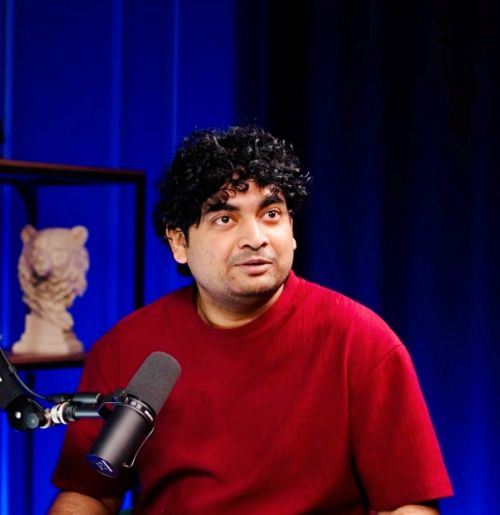
We are at episode 66 of iGaming Real Talk. Our host Surya Palli caught up with Chris Nikolopoulos, Chief Commercial Officer at BETBY, to discuss the trends shaping the future of sports betting.
From why sportsbooks are now competing with TikTok, Telegram, and X for attention, to the rise of micro-betting, prediction markets, and retention strategies for major sporting events, this conversation looks beyond today's headlines and into what's coming next.
We also explore how BETBY approaches marketing differently, including its partnership with Magnus Carlsen and why strategic thinking has become part of the company's identity.
We talk about:
- Why attention has become the biggest challenge for sportsbooks
- How operators should prepare for the next World Cup
- The rise of micro-betting and changing player behaviour
- Prediction markets and where they fit into the industry
- Why BETBY partnered with Magnus Carlsen
- What the future of sports betting products looks like
If you're building products, running a sportsbook, or simply curious about where the industry is heading, this episode is worth watching.
Key takeaways
- Sportsbooks no longer compete only with each other, they compete for attention. "Nowadays we don't compete with each other only. We compete with TikTok, Telegram and X." Chris believes the biggest competitive challenge for sportsbooks has shifted. Operators are no longer simply fighting for market share against rival brands. They are competing with every platform that captures a user's attention during live events. Retention now depends on keeping players engaged between bets through real-time interactions, gamification and personalised experiences.
- Acquisition only creates value when retention is already planned. "Acquisition without retention is a waste of money." Major sporting events like the World Cup generate huge acquisition opportunities, but Chris argues that operators often focus too heavily on bringing users in rather than keeping them engaged afterwards. Successful operators prepare retention campaigns long before the tournament begins and activate them while engagement is still at its peak. The operators who plan beyond the event are the ones most likely to maximise lifetime player value.
- Prediction markets are not a one-size-fits-all future. "Prediction markets are interesting, but they also introduce challenges around liquidity and player-versus-player dynamics." Chris sees prediction markets as an important trend but believes the business model comes with operational complexities that many operators underestimate. Liquidity, market depth, regulatory uncertainty and player protection all become significantly more difficult when players compete directly against each other. Rather than replacing traditional sportsbooks, prediction markets may evolve alongside them through different operating models.
- Shorter attention spans are reshaping sportsbook product design. "People can't even watch a movie without checking their phone ten times." Chris explained that changing consumer behaviour is driving the evolution of sportsbook products. As attention spans continue to shrink, sportsbooks are moving towards faster betting experiences, shorter markets and more contextual engagement throughout live events. Understanding broader digital behaviour has become just as important as understanding betting behaviour.
- Product decisions should be driven by data and not instinct alone. "Feelings are good, sometimes instinct is good, but educated decisions are also important." Chris emphasised that innovation should be backed by measurable player behaviour rather than assumptions. Building better products requires strong APIs, analytics capabilities and continuous analysis of how players interact with the platform. The most successful suppliers will combine creativity with data-driven product development to improve the player experience over time.
Notable quotes
Acquisition without retention is a waste of money.
If you want to differentiate, you have to improve the player experience and build the right tools for retention.
Prediction markets introduce opportunities, but they also create challenges around liquidity and player-versus-player dynamics.
About the guest
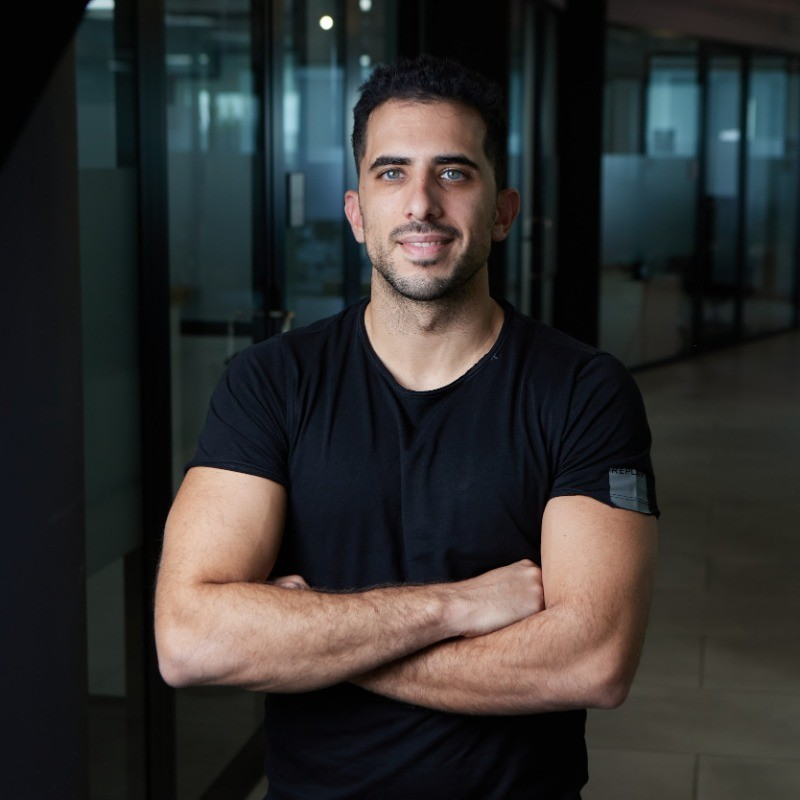
Chris Nikolopoulos
CCO at BETBY
Chris Nikolopoulos is the Chief Commercial Officer at BETBY, a leading B2B sportsbook provider known for its innovative approach to sports betting. With extensive experience in the iGaming industry, Chris focuses on driving commercial growth, product innovation, and strategic partnerships that shape the future of sports betting.
LinkedIn profileTranscript excerpt
A short passage published by the podcast, not the whole conversation.
Read the excerptHide the excerpt
- Surya
Hello and welcome back to another episode of iGaming Real Talk. I'm here at Sigma Asia and I have Chris from Betby. Betby is a well-known brand at the moment and they do some things really interesting and unique compared to other brands in the category. So I'm very excited to catch up with Chris and go over some of the things as the World Cup is also coming up very soon. So Chris, welcome to the show.
- Chris
Thank you very much, Surya. Nice to talk to you, excited about the opportunity to share our thoughts with the public and also excited to be here in Sigma Manila which is always a unique experience.
- Surya
Definitely. I mean we had a little chat yesterday at your booth and we were talking about the brand sponsorships and how you decided to go with Magnus instead of any other general football player or, you know, other sports player. Can you talk to me a little bit about the intention behind it?
- Chris
Sure. I mean when you are trying to do some marketing around the B2B brand, the main thing is to do something that you're proud of and to do something that you think brings some correlation between the ambassador itself and the brand. We didn't want to go the standard way. You know, I saw so many campaigns in the industry with some ex-retired football players or something like that and I don't really see the correlation, I don't see the symbolism.
On our side, we decided to dig a little bit deeper to think, and I think generally this is something that characterizes us in our approach. First of all, we like chess. We like to play chess. Second of all, we think that chess and Betby, as I said, have some things in common like we try to think ahead and we try to be strategic in our decisions, and chess is known for that, right? So Magnus also himself is like a special character.
So it's always fun and interesting to be associated with him. We always have very nice, interesting talks not only about business but about life, about different things, and it's a pleasure to work with him. So I think that was what was powering the decision. Overall, after already a couple of years that we are working with him, we already extended our contract. I think it's working great.
I think that our marketing campaign, "Make Your Move Together With Magnus," was super successful, and we are also planning some very unique things for the upcoming conferences.
- Surya
Yeah.
- Chris
I mean, you know that we had in ICE last time, yeah, it was not only Magnus, it was Hikaru and Gotham Chess - world icons of chess on the same stage. Never happened before, you know, in iGaming. I think this was genuinely big news not only for the iGaming industry but for all the world.
You have the top three players of chess on the same stage in an iGaming event talking about business, talking about Betby, talking about our industry, and sharing this knowledge with the public is a really unique opportunity.
- Surya
Yeah, absolutely. I mean, I haven't seen anything like it before. And as you said, the correlation between the personality and the brand and what it signifies and what it wants to attract from the target audience is very important, which I think you have named perfectly.
- Chris
By the way, sorry to interrupt you here. I have to say that at the moment we are the first and the only sportsbook which powers live chess matches on our platform globally. Yes, you can play live betting on chess on our platform.
- Surya
That's awesome, interesting.
- Chris
Yeah, really unique. It's not like a niche product, you know. No, it's not like super big, you know - it will never have the reach of soccer or, I don't know, cricket in India or something like that. But we like to do unique things because we also want to be proud of what we do, and you will be known for it.
- Surya
Yes, interesting. Yeah, I mean with the World Cup coming up, where do you see the real opportunity for sportsbooks and the special tournaments? How are you preparing for it and what is your prediction as to who's going to win?
- Chris
If I knew that, it would be great for sure, you know. I have a dark horse, I will tell you about it.
- Surya
Yes.
- Chris
But generally about the World Cup, what can I say? You know, like 15 years ago in our industry, when the World Cup was coming, our main thoughts were around concurrent users - how sportsbooks were going to power all these users and all this traffic at the same time. So, a technical infrastructure topic. Nowadays, this is not a problem, of course, right?
- Surya
We solved that.
- Chris
Yeah, we solved that, and yeah, we should have solved it and we did a long time ago. Any modern sportsbook should not have, and I think does not have, this type of problem. Now I think it's more about the competition and not the content itself. Let's face it, every provider has the same events, more or less the same markets, everything is very similar in terms of the content.
- Surya
Yeah.
- Chris
Then what you have to do if you want to differentiate, you have to work on the experience of the player and then you have to have the right tools in order to work on the retention of these players. You know, we see the World Cup as an opportunity for super high acquisition. But then acquisition without retention is a waste of money, right? So you need to be ready during the World Cup final, which is the peak of the engagement.
You have the maximum number of users at that moment. You need to be able to have already planned your campaigns to retain these guys and start immediately. Not 24 hours later, not 48 hours later - immediately during the final. I think the winners, in terms of operators, are going to be the ones who already planned this together with the providers for a long time, not during the last week.
They established escalation processes, workflows for already a year or more, and they have already been prepared. You know, the retention in an event like that should be happening not only during the game but obviously during the time between the games, right? So you have three or four games every day, you need to entertain the player enough so he doesn't leave the platform.
Because nowadays we don't compete with each other only in terms of operators or providers; we compete with TikTok, we compete with Telegram, we compete with X. A player, if he's not going to be entertained on our platform, he's going to comment on X, he's going to comment on Telegram, he's going to be on TikTok watching videos or whatever. So you need to be able to keep his attention.
- Surya
So scarce.
- Chris
It's tough because everything is moving in this short-term attention span. So you need to be able, with real-time notifications, with calls to action, with some gamification tools and campaigns, to keep the player entertained at all times. With regards to my thoughts about who's going to be the winner -
- Surya
Yes.
- Chris
Obviously we have the strong favorites, the usual suspects: France, Argentina, Spain obviously is a big favorite. Brazil - Brazil is obviously always a strong, competent team. The stats right now don't put them in the top three, but they're still obviously very good and can do a surprise, maybe. But in terms of a dark horse, I don't think they're going to win, but I think they're going to have a very good tournament: I would say Norway.
Yes, they have a good set of young, ambitious, and very well-trained players, and they're going a little bit under the radar. And you know, the World Cup historically always has a lot of surprises. It is surprise-oriented, and at the end of the day, that's why we like it. It's good for the operators as well when there's a surprise.
- Surya
That's how we make the money, yeah.
- Chris
Exactly, yeah.
- Surya
Cool, cool, cool. I mean, and it's also good value in Norway, so yeah.
- Chris
No betting advice, but I think it makes some sense.
- Surya
Yeah, we will put a disclaimer as well. But let's talk about the prediction market. It's the talk of the year; it's been taking over the news and the markets as well. We have Kalshi, where 90% or more on some days, weekends, and holidays - 90% of the volume on Kalshi is sports content. It's a direct competition to sportsbook operators, right?
So Polymarket and Kalshi, they have sliced the market for DraftKings and FanDuel, if we talk about the US, because that's where it's being popularized at the moment, and Crypto.com. So I feel like the prediction market pioneers are trying to brand a new category, which they did, and get a little bit from crypto, a little bit from gambling, and then create their own niche and go towards it.
Do you think that is going to be the future for sportsbooks, wherein everything will turn into prediction markets eventually, where the crypto platforms will go there and the gambling platforms go there, or how do you see this whole category?
- Chris
Yeah, it's a topic which requires a lot of discussion because there are many ways to look at it. Obviously the volumes are there. When we are talking especially about a regulated environment - at the same time, the regulated US was always a little bit different and will continue being different from the rest of the industry. So we cannot treat it exactly as the same thing as the rest of the world. Within the industry itself, there are a few different speeds.
There is this regulated US category with some big operators, corporations, and so on, and there are other very successful companies which are, again, super successful in the rest of the world but maybe not with this magnitude and not with this type of budgets.
- Surya
So you're saying that doesn't define what happens in the rest of the world? Europe especially, which is more mature and more -
- Chris
Europe is different. Asia is very different. Africa obviously is very different. The regulated US is its own category. But, you know, many trends start there and they can go to the rest of the world. What I think about predictions in general: first of all, I think that the concept of predictions is not so new, right? We have had binary options and all these things for 20 years. We have had Betfair a long time ago, and exchange betting, where you can back and lay.
In predictions, you can buy yes or no, but the concept is similar. It feels like it is made for the purpose to, you know, duck regulation in the US in a way. Yes, so it's a way - a Trojan horse, let's say, something like this. But what is interesting and we should keep it in mind: prediction markets are PVP, player versus player. What we are doing mostly here is an environment where we have the house and we have the player.
Many times people would say that the house will always have the advantage, and it's true mathematically - you will have the advantage. But at the same time, the house will protect the player, especially a good player, against certain things. In a player-versus-player environment, this doesn't happen; a smart user will win against a not-so-smart user, right? The thing is, you can't know who is a smart user on the other side.
So it is also an opportunity for some smart users to make some money and for some, let's say, a bit more assertive users to lose some money quite fast. Also, another issue you have to consider is liquidity. Unless you are a big operator - okay, Kalshi, Polymarket, these guys have the volume, it's fine - but if you're not on this level, how easy is it to have liquidity and be able to power all your markets? Not so easy as it looks. So, what do a lot of providers do?
They make a pool. Then a lot of operators are joining this pool, and then, for example, I'm an operator, you're another one; my player wins, your player loses, we have to exchange money. We have to put some money on the side to be safe from both sides, which creates a lot of complication. It's not so easy. I think that predictions is not right now a huge dot-com business, okay.
For sure, it's something that we want to have and we do have - we are actually the first ones to release predictions in a fixed-odds betting format, so not in a PVP format.
- Surya
What's the difference there?
- Chris
So we take the odds, we take the content, and we price the events ourselves, right? And it is still betting against the house, so you are betting yes/no on the same type of market but against us, not player-versus-player. So we are solving the problem of liquidity and the problem of funds between different operators. Every player is still betting against the house.
The content is the same, the markets are the same, it is very similar in terms of the experience of the user, but it's not PVP. So it operates in a fixed-odds betting environment like normal sports. We see some trend on it, but you know, I see other trends which are right now beating it. For example, micro-betting - fast betting like betting on what's going to happen in the next 10 seconds, like a throw-in or something.
I think the future of sportsbook dot-com businesses will move more towards that than predictions. That said, the regulated US is a different story. Because, you know, already we see that it's being blocked or restricted in some of the jurisdictions in Europe because obviously they want to protect legacy operators. So it can always be a little bit political. We have to wait and see how this unfolds.
- Surya
Yeah. And the other thing also, like I was always wondering, the person opposite always has a chance to cheat with insider information.
- Chris
Yes, if the event is big and if big players are also involved, this is definitely a possibility. I don't know how you can restrict that insider trading. I mean, it happened a lot of times, right? We all know the cases. I think there was one about Trump or an invasion of Iran.
People with inside information will try to take advantage of it, and there's not much you can do in order to protect against it because, again, it's player-versus-player - so it's not like you are winning the funds of the house, you are winning the funds of another player. When you have the house, the sportsbook, the casino, it is different.
Even if we have to say that in crypto sports betting right now there is a little bit of a similar issue, because in crypto, what we are known for is fast deposits and fast withdrawals. So the moment you win a bet, you can more or less withdraw your winnings immediately.
Someone can say that you're going to have the same type of problem, but still, you have an account, it's against the house, and if you want to continue betting on this website, there is some discussion going on. So it is a little bit different.
- Surya
Okay, okay. You talked about micro-betting and a couple of things. Can we expand on those trends a little bit more in terms of how they are going and what opportunities new operators have in this area in sports betting?
- Chris
Yeah, I think it's not only about sports betting; it's about society, the demographics, and the new generation. People are not even able to watch a movie without checking their phone like 10 times, you know? You sit down to watch a movie for like two hours and you have to check your phone 10 times - 100 notifications, all the social media, everything.
So all this naturally makes your attention span a little bit smaller and you are constantly seeking some dopamine, some call to action. It's sad, actually, but -
- Surya
It is a little bit sad, yes.
- Chris
But we have to face it. And you know, I think sports betting should be about entertainment; our industry should be around that. That's the only thing I do personally - live cricket betting - but I always have a limit and I do it for entertainment only during the matches, that's it. Everyone has to be responsible enough. I know we talk about this responsible gaming, blah blah blah, there are a lot of -
- Surya
But the question is, who needs to be responsible?
- Chris
The player needs to be responsible, but then if the player cannot, there is a certain level of responsibility on the operator, right? We operators should realize that there should be - and I mean, depending on the jurisdiction, there is. It's not that everything doesn't work; for sure there is big space for improvement in that area, but yeah, operators should also be a little bit responsible, you know, prevent some special cases.
But if we leave that aside, as we said: small attention span, constant demand for dopamine with some calls to action. So I think that's the future. In the past, obviously, everything was pre-match. Then we started moving to live betting; now it's 90% live betting. Now we are moving to fast betting. We were moving to like 5-minute markets; now we are moving to 10 seconds. What's going to happen in the next 10 seconds? How can you notify the user about that?
And not only the user who is on the sportsbook navigating up and down, right - how can you inform the user who's on the casino playing a slot? Can you have a pop-up, can you have a call to action?
- Surya
Is it a disruption to his experience on what he or she is doing?
- Chris
If you do it smart, I think there are ways to do it without disrupting the experience. And from a provider perspective, what I think you need is a really granular, powerful API to be able to connect with different third parties, CRM providers, data analytics structures. And obviously you need a team that is smart enough to be able to track and analyze player experience. That's what we are trying also to do here; we are trying to have educated decisions and not just feelings.
Feelings are good, sometimes instinct is good, but education is also important.
- Surya
Cool, that's a very good point. What are the plans for Betby for the next few months to end 2026?
- Chris
We are releasing one thing. Yeah, we are releasing - I'm not going to say everything about it because I think we're going to be able to showcase it properly in Lisbon.
- Surya
Okay.
- Chris
So maybe then we can talk about it more. But we are releasing a new series, a new portfolio of games which are sports betting games. It's not casino or something like this, but actually fits very well with what we just described, and I think that this really can be a game changer in the industry. At the same time, you know, we continue focusing a lot obviously on the World Cup, as are all operators.
We have dedicated plans, promotional plans, operational plans with all of our big clients, and not only the big ones. We are building some serious products, Surya, and people should come and talk to us.
- Surya
Definitely. So, thank you so much for joining and sharing these details. Although, you know, we will hear more - there is more to come on that last point.
- Chris
I'm not allowed to say more yet. I want to see it first. Yes, yes, yes, guys, I promised. So come find me in Lisbon and I'll have something for you.
- Surya
Thank you so much for watching, that's it for today. Do share your thoughts in the comments below, and do share your prediction as well - who's going to be the winner for the World Cup? And I'll see you on the next show. Thank you.
 1 min
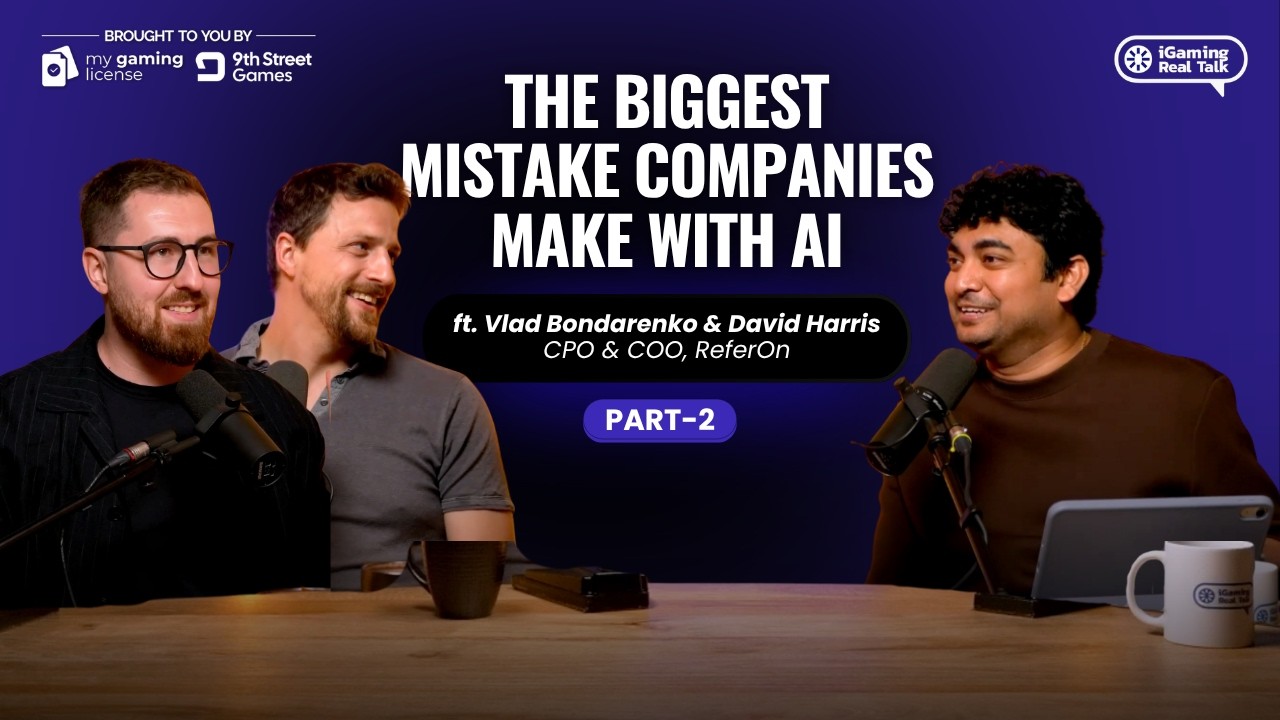
1 minThe Biggest Mistake Companies Make with AI | David Harris and Vlad Bondarenko
David Harris and Vlad Bondarenko · COO & CPO, ReferOn
 1 min
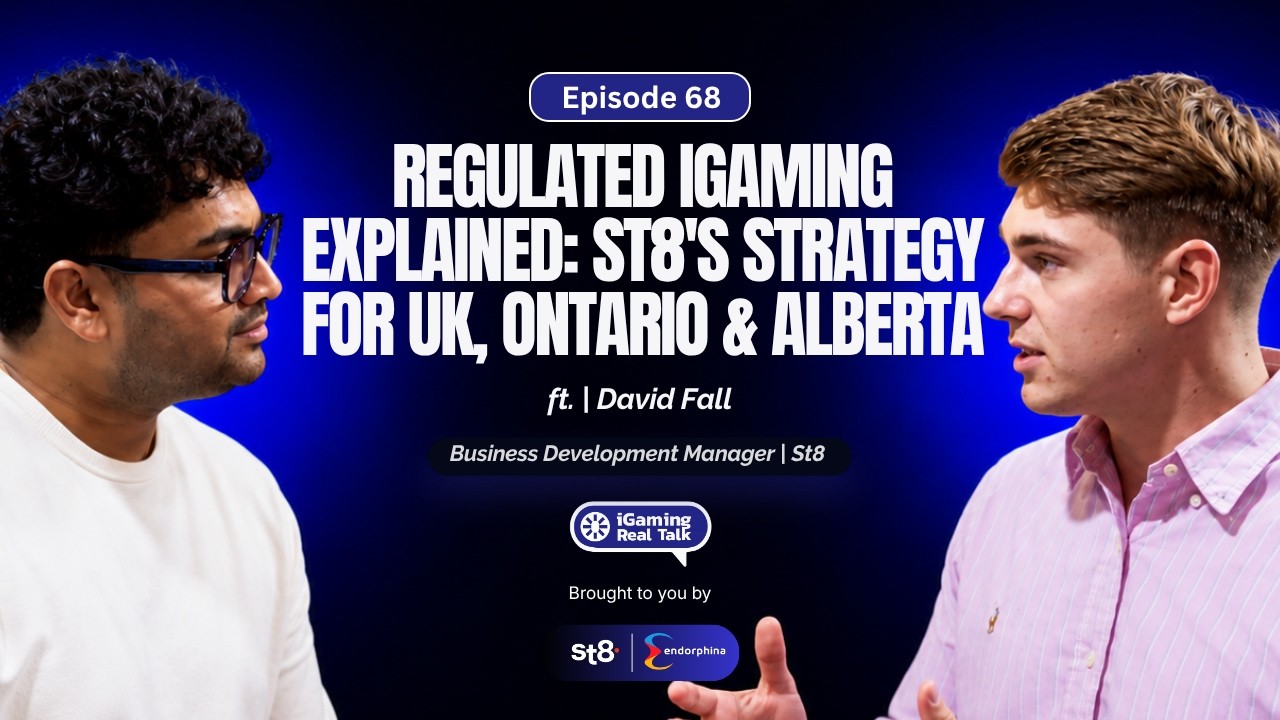
1 minRegulated iGaming Explained: St8's Strategy for UK, Ontario & Alberta | David Fall | St8
David Fall · Business Development Manager, St8
 1 min
1 minAI, Fraud & Affiliate Marketing: What Operators Need to Know | Levon Nikoghosyan | AffPapa
Levon Nikoghosyan · Chief Executive Officer, AffPapa