

iGaming Regulation Overview 2026 from Heathcliff Farrugia, SiGMA
with Heathcliff Farrugia, Chief International Relations Officer, SiGMA
- EvoVerse

- Blokotech

Credited on the iGaming Real Talk podcast episode. Not advertising on this site.
In episode 43 of iGaming Real Talk, Heathcliff Farrugia, Chief International Relations Officer at SiGMA, breaks down the current state of iGaming regulation in Brazil and Latin America from Sigma Sao Paulo.
Key topics discussed
- SiGMA's journey from a Malta idea to one of the world's biggest iGaming expos
- SiGMA's international relations work at government and policy level
- Why Brazil's online gaming regulation feels unstable and uncertain right now
- The unique challenge of regulating online gaming before land-based
- Regulators vs policymakers: why politicians often misunderstand the industry
- Lessons from mature markets, UK tax hikes, Germany's low legalisation rates, and Denmark's successful model
- The dangers of unregulated markets, illegal operators, and over-taxation
- SiGMA's strategy to bridge the gap between operators and regulators across Latin America
A must-watch for operators, regulators, and iGaming professionals who want clear insights into what's happening in one of the world's biggest emerging markets and how proper regulation can protect players while growing the industry.
Key takeaways
- Uncertainty in the Brazilian Market. Brazil's current iGaming regulatory environment is characterized by significant instability and ambiguity for industry operators.
- Challenges of Regulating Online Gaming. The episode highlights the distinct difficulty of establishing online gaming frameworks before foundational land-based regulations are in place.
- Policymaker Misalignment. There is a notable gap in understanding between industry regulators and political figures, often leading to misinformed policy decisions.
- Lessons from Global Markets. Mature markets like Denmark serve as successful models, whereas the UK's tax hikes and Germany's low legalization rates provide cautionary tales.
- The Role of SiGMA. SiGMA acts as a bridge between operators and governments, working to foster dialogue and effective policy implementation across Latin America.
Notable quotes
Regulation is essential to protect players while allowing the industry to grow sustainably in emerging markets.
Bridging the gap between operators and regulators is key to navigating the complex landscape of Latin American iGaming.
About the guest
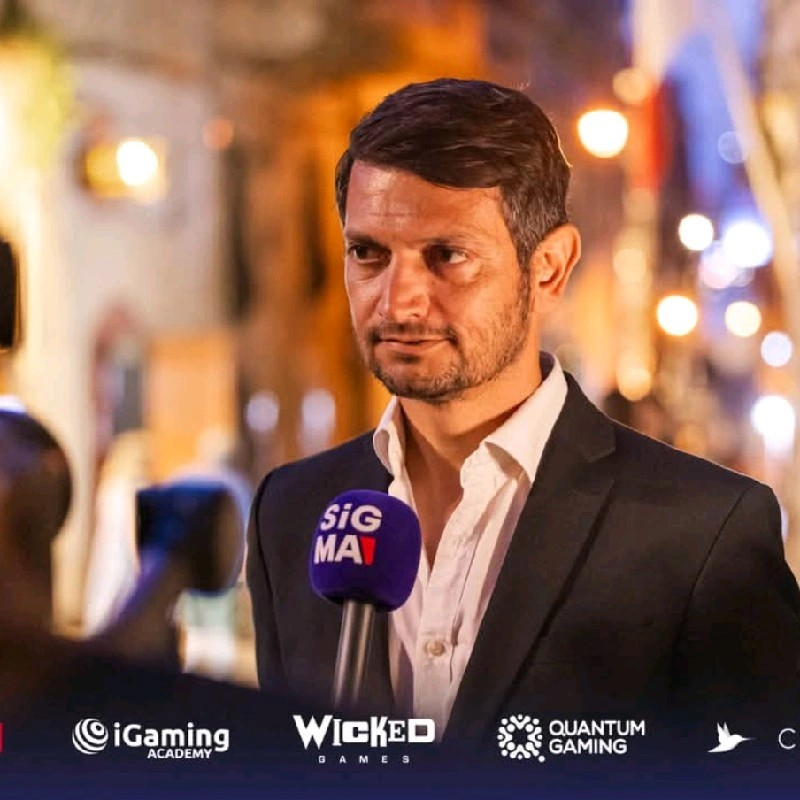
Heathcliff Farrugia
Chief International Relations Officer, SiGMA
Heathcliff Farrugia serves as the Chief International Relations Officer at SiGMA. He is an expert in global iGaming policy and facilitates high-level dialogues between governments and industry stakeholders.
LinkedIn profileTranscript excerpt
A short passage published by the podcast, not the whole conversation.
Read the excerptHide the excerpt
- Surya Palli
iGaming Real Talk is launching new interview series from BiS SiGMA South America. The event has matured into a perfect melting point for business in Brazil and also Latin American market. In two days, we have had conversations with leaders, experts from mature businesses in LatAm and Brazil, and we talked about the regulation as well as the state of the market in Brazil after regulation. This series is brought to you by EvoVerse.
They offer custom crypto casino source code so that you can launch your crypto casino the way you want it, and you can have full control over your margins and the product. This series is also brought to you by Blockotech, which is your go-to platform provider for LatAm market. The Blocko Padel Tour, sponsored by SiGMA, also brings together global iGaming community with sport, fun, and competition across some of the events.
Hello and welcome back to another episode of iGaming Real Talk. I'm here at SiGMA São Paulo in Brazil, and I have with me Heathcliff Farrugia from SiGMA. It's a pleasure to have you here.
- Heathcliff
Pleasure is all mine. Thank you.
- Surya Palli
Thank you again for joining. When I think about you, I remember the days at SiGMA back in the day 2017-18 where you used to host press conferences as well as treat the community that comes to SiGMA as well back in the day. So, from there to now, can you explain to me a little bit about the journey?
- Heathcliff
Well, as you said, if you want I can go even a bit further back. Because I know SiGMA since before SiGMA. I still remember I was at the then LGA. I'm not sure we had done the rebranding to MGA. And I remember Eman coming to the office. I've known Eman before. This was I think 2014. I just got out of graduation. Eman coming to the office and he was presenting his idea. And at the time in Malta, we had conferences but we did not have an expo.
And I remember Eman explaining his idea, telling us Malta, there is a huge iGaming industry, a huge iGaming community. We have very good conferences but we are missing an expo. And he wanted to do this expo. And from a government perspective, there was the backing. Everyone liked the idea. We said, "Well, let's give this a try." And we supported Eman and I mean fast forward to today, look around.
So, from that initial idea, from that one meeting we had when we were at the then LGA to what happened now, if you fast forward, I think it's been what, 11 full years now? And SiGMA is now doesn't need any introduction from my end. SiGMA is one of the biggest gaming expos that are around. They're just gaming cuz as you know nowadays it evolved.
There is AI, there is blockchain, there is affiliates, there are so many things which surround SiGMA, but ultimately the core remains the iGaming community.
- Surya Palli
Yeah. Oh, it's a long way we look at it. I mean, SiGMA is a success story from Malta itself, right? Malta has taken amazing steps in establishing itself as a key iGaming hub in Europe and globally as well. And I think SiGMA came out as a nice success story out of it integrating the community as well, not only in Malta, but the iGaming community in Europe and wider the year by year.
So, it's great to see also because for me it's also very proud feeling because I was part of the journey and I'm incredibly grateful that's where I am here right now. Also, it's mainly because of SiGMA.
- Heathcliff
So, you know, if we look at your role at SiGMA, right? It's chief international relations officer. So, what does it actually involve in terms of activities, in terms of positioning itself? Yeah, so what we are doing at SiGMA now, I've joined SiGMA close to a year and a half ago, and we formed this new team. And myself with my team we focus on international relations, but mainly not just, but mainly at government level, at policy level, regulators, politicians.
And what we try to do wherever we go, obviously SiGMA now is an international brand. You mentioned that it started in Malta and I do agree with you. SiGMA if you ask me it's one of the biggest success stories Malta had over the last decade. But now SiGMA's international business. Wherever we go, the industry recognizes us. Whatever you say SiGMA, you immediately grab their attention.
So, what we are doing is we are using that network coupled with the connections with our network when it comes to government relations. And we are trying to help the industry bridge the gap with regulators and with policy makers. And wherever we go, even here in Brazil. So, we are in touch with the authorities here. If you look at our opening ceremony or our banners, yes, we have regulators not just from Brazil. Like for example, we are here in Brazil.
This is what we consider our Latin America summit. Here we had members or government officials from Paraguay, from Colombia, from Peru. So, apart from Brazil, we had other associations. We had Argentina as well. So, what we try to do is once we are here in Latin America, we try to get all those who are close to this industry, especially the regional ones. We try to get them here. So, we discuss the hot issues.
We don't want to have an expo summit where the hot issues are discussed in separate meetings. We want to discuss them. The hot issues, we discuss them on panel. And when we approach regulators, they are very open. Sometimes there is this misconception that regulators do not want to discuss the hot topics on panels. Which is not true. We get regulators of different jurisdictions.
We put them on the same panel because, believe it or not, there are issues which are more common than one would think. Sometimes you see many who believe that a topic or an issue is very sensitive or very particular to a particular jurisdiction. But in reality, a lot of common issues are common to a number of other regulators.
- Surya Palli
For example, I mean if we look at Brazil, I've been having conversations since yesterday. I have different types of companies come around here and speak about what's happening in Brazil. And it seems like the regulation right now is a little bit unstable. And there's a lot of uncertainty in how it is being managed. What's your opinion on the regulation in Brazil right now?
- Heathcliff
When you have regulation, you keep in mind that there is a huge difference between the regulators and the policy makers. If you allow me, usually I would say the issues pretty much come from politicians or policy makers. And the reason is because they do not necessarily understand how the industry works. And keep in mind that as an industry, they care about the public perception. I mean, it happens everywhere.
Ultimately it is an industry where unfortunately sometimes when it is targeted, sometimes it makes sometimes the politicians look even better, believe it or not. But here in Brazil, when we came here last year exactly, a couple of months after, for the first time Brazil regulated online gaming. It wasn't an easy journey. It never is. Because even the bill in parliament has been going up and down in parliament with adjustments a number of times.
So, we need to understand the fact that when you are regulating anything more so if it's gambling, regulations do not get introduced easily. So, it does take time. But last year, regulations were introduced and the impact the country had was huge because even governments you start collecting taxes. Sometimes there is this idea, this belief that if you ban the industry, you can stop it. It doesn't happen. Here in Brazil it was always very popular with sports betting.
And we all know that this part of the world they are fanatics of football like us in Europe for example. There was a lot of sports betting already. So, it was there already. Now, it is a matter of whether or not the government wants to regulate and regulate properly so that they start understanding what's happening and they start getting the tax incomes. If you try to ban, if you try to avoid regulating, betting will still take place.
But it will happen in an unregulated fashion. And we all know what can happen if an industry grows in an unregulated fashion. There are no player protection mechanisms. Even the funds, the government taxes do not go to the government.
- Surya Palli
Do you try to have these conversations with regulators whenever they come up with some strict laws because essentially it will push the players to the black market?
- Heathcliff
Yeah, but we do. But keep in mind that many a times, as I said before, it's not the regulator. So, when you speak to the regulators, the regulators, so far I would not, they need to report to the politician. It happens everywhere. Fine. They are independent, but ultimately they still report to the minister of sometimes finance, sometimes economy.
But with regulators, they all know that the best way to do things, the best way to have this industry running properly, is to regulate and to regulate properly. So, here in Brazil, it was to be honest, I do not know of any other country who did what Brazil did in the sense that I think it's the only country I know where they regulated online gaming before land-based. Usually land-based has been with us many 40 years.
Online gaming is to a certain extent only recent, that's in the last 20, 25, 30 years. But Brazil had regulations for online first and up to today they have not regulated land-based. So, even though there is land-based activity, it is pretty much unregulated. And now, there is a bill in Parliament as well as similar to online. So, there is interest in regulating. Today, I had a very interesting conversation with one of the senators here in Brazil.
He was on panel as well and we were discussing this. He is one of those policy makers who is pushing because he believes that the industry needs to be regulated. So, he is the one pushing forward the bill in Parliament at the Senate to not only make sure that the online gaming regulations remain there, but to introduce the land-based as well. But, it's never an easy journey. It's never an easy journey.
- Surya Palli
When we look at the plans for SiGMA next year, how do you see it evolving in an evolved, regulated market?
- Heathcliff
Well, from our perspective, from a SiGMA perspective, Latin America and Brazil especially, it makes huge sense. I think SiGMA is the biggest Latin American summit that is in this industry. I mean, look around. The number of operators there are so. For us, Brazil will always make sense. What we try to do, even during this event, we try to have these conversations with regulators, with policy makers.
What we did as well, we got even other politicians from different other countries. We had a minister from Paraguay who was explaining how they did it in Paraguay. And we had these conversations. At one point we had a conversation that was Colombia, Paraguay, Brazil, Argentina. We're all discussing regulation and how it should be done.
And in reality it's very easy to realize how even though different countries, different jurisdictions, but in reality the discussions are all the same. So for us Brazil even if there are changes which we hope the changes in this reform and regulatory perspective, we hope they are positive. I know what maybe we're referring to, there is a fear that because there were those who are pushing to go back to where it was before.
There are those who are pushing to not only not introduce the land-based regulation but to go even as far as removing the online gaming regulations which were introduced over last year. I mean in politics it can happen. I think it would be the wrong decision for Brazil because even if you look at the government taxes which are being collected, we're not talking about something small. Here you need to realize that it's what 220, 230 million population. So Brazil is huge.
So going back to a situation whereby you have such a huge country, massive country. I mean Brazil is the size of France, Italy and Germany all together. So it's pretty much a continent. So if you go back to a place where you do not have regulation and what could happen? Do you think people will stop betting? No. People will still be betting but will find different betting solutions which are not properly licensed operators. And what happens then? The government gets no taxes.
The players are not protected then. Because usually a number of these unlicensed operators are operators who wouldn't be caring much about stopping a player who is showing problem gambling behaviors. So, why would the government want to go back to that place? So, I hope that at the end common sense will prevail. I think that at times it could be, but it always happens. You will always have groups within parliament, within senate, politicians. It always happens everywhere.
That they would be pushing their own agenda because they believe that the best way to regulate the industry or to control it is perhaps to ban it, perhaps to stop it. But those who are really in the industry, those who like us know how it works, how it operates, obviously, we know that you cannot stop especially online gaming.
- Surya Palli
It's mostly a habit, and it's for entertainment, and so on. And also, if we look at much more mature markets like UK, for example, which probably is one of the most mature markets, right? What's happening in the UK with the rise of taxes, do you think it still makes sense for operators to operate in such a kind of market because of such strict and high taxes?
- Heathcliff
I'll give you my personal opinion on this one. I think it's the wrong assumption to increase tax. Especially from a mature market like that. It's not like a new regulation. To increase taxes in such a way, for me it's like telling an operator that now it's even more worthwhile to give it a shot at the illegal market. Because if you are operating illegally, you're not paying the 40% tax. You have no compliance costs.
I mean, so if there was already a group of operators, whatever you do, you will always find a group of operators who for them it's still worth the risk. So, I do not see a situation where you have 100% channelization. No country will have 100% channelization. No country can say that ultimately we have zero illegal market.
- Surya Palli
I was seeing a report saying that in Germany their channelization was 69% or around 70-some percent. And I thought it was a joke. I'm not sure if it's true or not, but it seems like a joke. Like especially if you look at markets like UK, Netherlands, Germany who are trying to be as strict as they can. I'm not sure if it's helping the industry.
- Heathcliff
To be honest, I'm not sure if Germany has 70% channelization. You need to be very careful at which figures to look at and who's the one behind the figures, the source to make sure it's a reliable source. But in my opinion, the channelization rates are even lower than that. They're quite lower than that. And it's a pity because what happens is especially if you look at Europe, we have a situation where it doesn't always pay to be regulated.
It doesn't always, is it always that clear that being regulated, paying the taxes, being properly licensed. When you have when you start being too restrictive, when you start having all these taxes shooting up, ultimately how can you have channelization? And as I was saying before, even if you're regulating the best way possible, you will always have that percentage of companies for them it's still worth the risk. And you cannot focus on having 100% channelization.
However, I believe that with proper regulation, you should aim at having channelization. However, you cannot obtain this but by overnight coming up with a new tax regime that all of a sudden even the most reputable operators, they will start thinking twice. Why am I in this market? Keep in mind that for an operator, the compliance costs, to train the compliance costs are also going up. Everything.
And then you have in parallel a fully licensed operator competing with the illegal market where these guys are able to offer even the bonuses they are able to offer the marketing costs they can spend. Why? Because their compliance cost is pretty much non-existent.
- Surya Palli
Is there any jurisdiction which you think is doing excellent job in terms of regulation, licensing, compliance?
- Heathcliff
I wouldn't say excellent job. There are a couple. The best in your opinion. To be honest, I still like the Danish model. The way Denmark did it was good even when they started. They had quite some good numbers when it comes to channelization. There are a number of countries who are doing a good job. But some other countries, even if you look at something comes to mind, the fines. I mean it's another huge issue as well then. Which is only carried by the licensed operators.
Because if you are not licensed, just to explain to you how a regulator works. So if you are a regulator, it's like you are in a club. If you are a regulator, you have 30, 40, 50 licensed companies. You as a regulator, your job is to monitor these 30, 40, 50 licenses. And if anyone is not in line with your regulations, then you issue fines. And sometimes we see these multi-million euro fines coming up one after the other.
Keep in mind that all those fines are going towards the licensed entities, the licensed companies. If you are operating illegally, nobody can give you a fine. Because like for example, let's say the KGC or Denmark or Malta. If you want Malta, let's talk about Malta. The MGA cannot issue a fine on a company which is not in possession of the MGA license. Because it's like a club. So the MGA can only issue a fine on a licensee.
- Surya Palli
Is Netherlands doing it? I saw Netherlands is issuing fines left, right, center. Is KSA? Because I've seen in some news that they're issuing fines left, right, center. And then what's happening? These companies that are fined are closing down. How do you enforce? And they change to another jurisdiction. How do you enforce a penalty on a company which is not in possession of your license?
- Heathcliff
Usually it is not the case. So usually regulators, how do you enforce? And they change to another jurisdiction. Sometimes you see these multi-million euro fines which are pretty much never collected. So, you see these it's again a public perception 10 million euro fine which is never collected because if you're giving a fine to someone who doesn't even have your license, it would be a company structure. I don't know where it is. How do you collect the fine?
So, sometimes you see these multi-million euro fines which are never really materialize, unfortunately.
- Surya Palli
If we look at the way forward, what's the way forward for the industry to mature and go in the right direction?
- Heathcliff
The industry has matured. I mean now I've been in the industry what? 12, 13 years. I would say it's matured big time. Even if you look at SiGMA, if you look at these conferences, I mean if you attended these conferences 10 years ago, it wouldn't be the same. I mean 10 years ago it was all about partying and stuff like that. Now, when you come here, you go wow, this industry has matured.
Very high-profile companies, very good discussions, even the way people dress up for these conferences, the kind of negotiations that are going on at these conferences. So, this industry has matured and it matured big time. But, I don't see a reality where we won't have these kind of discussions. So, regulation talks, discussions with one country going overboard with regulations, one country going overboard with taxation, a country banning the industry.
We'll always have these discussions and I think it is the nature of the industry. I think it is how the industry will keep progressing, but I believe that we should as an industry keep focusing and this is what we do at SiGMA. At SiGMA we focus on regulation. Whatever we go, even if you listen to the opening speech of Eman, our founder. We always push forward this mantra that we believe in regulation and regulation is the only way forward.
And we do not just say it just to say something because the only way to help an industry grow properly is by having proper regulation. The industry will always grow. The industry will keep growing. It is up to authorities, up to the different countries whether or not the industry grows in a regulated fashion or not, but the industry will keep growing. The industry will keep maturing as well. But keep in mind that even the operators, it's a misconception.
The vast majority of the operators want to be regulated. Sometimes you hear many who say or think that operators they don't want licenses, they don't want regulation. Look, operators do not want to be over regulated. Do not want to be over taxed. However, all those in the industry understand that there needs to be some form of regulation. There needs to be some form of taxation. But you need to do it in the proper way.
When you over regulate, when you over tax, the industry will still keep growing, but it will grow in an unregulated fashion, which is not what those in the industry want.
- Surya Palli
Well, thank you so much for joining me. Thank you for going through your perspectives as well as what's going on globally with regards to regulation. And thank you for also giving a perspective on what's going on on the ground here in Brazil.
- Heathcliff
My pleasure to have you here.
- Surya Palli
Pleasure was mine. Thank you. So, that's it, guys. Thank you for watching. Do let us know your thoughts in the comments below, wherever you're watching, LinkedIn, Instagram, YouTube. Do give us a like, subscribe, as well as follow Heathcliff for more updates on regulation, as well as his journey at SiGMA. Thank you so much.
 1 min
1 minThe Biggest Mistake Companies Make with AI | David Harris and Vlad Bondarenko
David Harris and Vlad Bondarenko · COO & CPO, ReferOn
 1 min
1 minRegulated iGaming Explained: St8's Strategy for UK, Ontario & Alberta | David Fall | St8
David Fall · Business Development Manager, St8
 1 min
1 minAI, Fraud & Affiliate Marketing: What Operators Need to Know | Levon Nikoghosyan | AffPapa
Levon Nikoghosyan · Chief Executive Officer, AffPapa