

What does it really take to build games for Brazil? | Fabíola Jaeger | Caleta Gaming
with Fabíola Jaeger, Caleta Gaming
- EvoVerse

- Blokotech

Credited on the iGaming Real Talk podcast episode. Not advertising on this site.
Building iGames might not be the easiest thing but there's something much harder.
That is building games for BRAZIL.
We are here to learn about this from someone who used to write codes, products and now has built one of the leading gaming studios in Brazil.
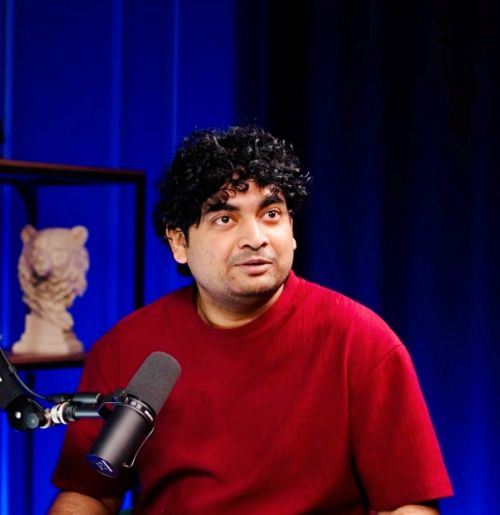
In Episode 64 of iGaming Real Talk, our host Surya Palli had a talk with Fabíola Jaeger, Co-founder & CEO of Caleta Gaming, to discuss her journey from software developer to building one of Brazil's leading game studios.
The conversation also explores how Brazil's regulated market is evolving, what game providers need to understand about Brazilian players, and why community and local culture are becoming key parts of game development.
We talk about
- How Fabíola founded Caleta Gaming
- Why poker inspired her career in gaming
- What regulation has changed for game providers in Brazil
- How Brazilian player behaviour differs from other markets
- Why community-driven games perform better
- The importance of localised and customised content
- What's next for Caleta Gaming and Brazil's gaming market
If you're interested in Brazil, game development, localisation, or the future of regulated iGaming, this conversation is worth watching.
Key takeaways
- Poker taught her how to think before it taught her how to build games. "Poker can teach you how to make decisions... in terms of risk, strategy, and how to behave with people." Fabíola's journey into iGaming started with mathematics, followed by poker, which she believes is much more than just a game. She explains that poker helped her develop strategic thinking, risk management, and decision-making skills lessons that later influenced how she approached game development and running a business.
- Caleta Gaming was built where patience met opportunity. "I would say it's a mix of patience and opportunity." Before founding Caleta Gaming in 2013, Fabíola worked as a software developer before moving into mathematical game design. Together with her co-founder Paulo, who focused on front-end development, they spent three years building games before deciding to create their own studio. Their combined expertise became the foundation of Caleta Gaming.
- Regulation changed the business. Now game providers have to adapt. "There are some challenges for the game providers... all the certifications that we need to provide to the government." While much of the industry's attention has been on operators, Fabíola explains that regulation has also created significant work for game providers. Certification, compliance, documentation, and licensing have become essential parts of doing business in Brazil. For providers, succeeding in the market now means meeting both technical and regulatory standards.
- Community is what makes games succeed in Brazil. "If you find a way to connect players with your games... then it's a way to succeed." According to Fabíola, Brazilian players build communities around them rather than just simple playing. She points to titles like Fortune Tiger and Caleta's own games, such as Bingo by the Funk and Pipa Crash, as examples of products that resonate because they connect with Brazilian culture and shared experiences. For her, community is part of game development itself.
- Brazilian players don't behave like everyone else. "Brazilians are very sensitive with the bet levels and bet limits." One of the biggest lessons for international providers is that products can't simply be copied from other markets. Fabíola explains that Brazilian players typically prefer shorter sessions and are far more sensitive to betting limits because of local purchasing power. What works in Europe doesn't necessarily work in Brazil. Understanding player behaviour is just as important as understanding regulation.
- Localisation goes far beyond language. "Each operator might be focused on some region of Brazil, and that region is completely different." Fabíola highlights that Brazil isn't one single market. Different regions have different cultures, communities, and player preferences. This is why she believes customised and exclusive content is becoming increasingly valuable for operators looking to connect with specific audiences instead of treating Brazil as one homogeneous market.
- Everyone builds for the Player. Next opportunity is to build with them. "Players can bring you feedback... they can bring you ideas." For Fabíola, game development shouldn't stop once a title is launched. She believes engaged communities become valuable sources of feedback, helping studios improve games, introduce new features, and better understand what players actually want. In her view, listening to players is becoming one of the biggest advantages a game studio can have.
Notable quotes
Poker can teach you how to make decisions, manage risk, and understand people.
Players can bring you ideas. That feedback is very important for game providers. If you find a way to connect players with your games, it's a way to succeed.
There are some challenges for game providers. Of course, all the certifications and paperwork we need to provide to the government. We're learning from the market while the market is also learning from regulation.
About the guest

Fabíola Jaeger
Caleta Gaming
Fabíola Jaeger is the CEO and co-founder of Caleta Gaming, a game development studio focused on the Brazilian market. With a background in software development and mathematics, she leverages her expertise in logic and risk management to create high-engagement gaming experiences.
LinkedIn profileExtended summary
Published by the podcast, not written by our newsroom.
Read the summaryHide the summary
Surya: They call it as a game of skill because there is randomness. Fabíola: Yeah, but you can lie. You can bluff. So that's where the strategy comes. Surya: So, what are the changes you're seeing right now after the regulation has kicked in? Any changes in the player behaviour? Fabíola: Brazilians are very sensitive with the bet levels and bet limits. So, this is something to adjust. Surya: Why did you start and how it's going so far?
Fabíola: It's a mix of passion with opportunities. Surya: Brazil is huge. Fabíola: Yeah. So, each operator, they might be focused on some region of Brazil and that region is completely different. Brazil is in a very important moment for the game provider because there's a kind of license process coming. Surya: iGaming Real Talk is launching a new interview series from BiS SiGMA South America.
The event has matured into a perfect melting point for business in Brazil and also Latin American market. In 2 days, we have had conversations with leaders, experts from mature businesses in LatAm and Brazil, and we talked about the regulation as well as the state of the market in Brazil after regulation. This series is brought to you by Eevo Verse.
They offer custom crypto casino source code so that you can launch your crypto casino the way you want it and you can have full control over your margins and the product. This series is also brought to you by Blockotech, which is your go-to platform provider for LatAm market. The Blocko Parallel Tour, sponsored by SiGMA, also brings together global iGaming community with sport, fun, and competition across some of the events. Surya: Hello and welcome back to iGaming Real Talk.
I'm here at SiGMA São Paulo in Brazil, day two, and I have with me Fabiola from Galeta Gaming. It's a brand that I have known since I working at SiGMA and they have been active in the market for a long time, as I understand. So, I remember the brand from those from my SiGMA times, but Fabiola, please, thank you for the opportunity. Thank you for being here. Fabíola: Thank you for the invitation.
It's just a pleasure to be here and talk a little bit about our journey, our history, and about Brazil, of course. Surya: Definitely. So, I mean, yeah, let's get into it. When did you start Caleta Gaming and what actually inspired you to start? Because it's really interesting to understand why founders start something, right? There should be a reason.
There should be a gap in the market or there should be a strong pain that they have experienced as a customer, or, you know, I always like to dive deep into these reasons, the inspiration, the trigger for starting a company. So, why did you start and how it's going so far? Fabíola: I would say it's a mix of passion with opportunities. Surya: Okay. Fabíola: Since my young age, I've always been very in love with mathematics.
So, I'm a big fan of math models, etc. And also after that, during the college, I've learned how to play poker. Surya: Oh. Fabíola: Yeah. So, me and my friends, we are playing poker a lot, once a week, twice a week, and playing it in Rio, but also playing online. Surya: It's a beautiful game. It's different to other. Fabíola: Yeah. And I think it's more than a game. Poker can teach you how to make some decisions in a strategic level. Surya: In terms of risk?
Fabíola: Yes, in terms of risk, in terms of how to behave with people, and it's even good for the commercial, for the sales people. I think everyone should learn how to play poker. Surya: You know what? I was coming to this event and I had a long flight because I come from the other side of the world. And then I was just, I downloaded a few videos to learn poker because there was a poker tournament happening just before the event.
I was like, every time this poker event happens and I'm not able to participate. Let me try to learn what this is all about, right? So I downloaded some videos. I was watching on the flight. Okay. The basics of poker and everything. And then luckily the in-flight entertainment had a poker game. So I was like, okay, I was playing. I was like, this is very easy. Fabíola: Here it was a video poker or a multiplayer? Surya: It was a, I think it was me versus computer.
As far as I know there were names but I think it's computer. Right? And then I came to the poker tournament in this event. I went. It's totally different, you know? What personally I learned was you see people's faces. Fabíola: Yes. Surya: There were two people on the table whose face didn't change at all. And that is when I understood this is what is poker face. Fabíola: Yes. Yes. Exactly. Surya: But it's a beautiful game. It's nothing like anything I've experienced before.
So I think, yeah, I think it. But you know, I still have a question. Why do they call it as a game of skill? Because there is randomness as in when he gives the cards, the cards is still random. I can't control. Fabíola: Yeah, but you can lie. You can bluff. So that's where the strategic comes. Surya: We are real talk. I'm very bad at lying. And that's why people were easily guessing what I. Fabíola: It's not only the odds that matters.
How you behave on the table and etc. it counts. So that's why they put as a skill game because depending on your skills, what are you doing, you're going to have the results. It's not only the card. The cards are part of the game, of course. They're very, very important. But how you act, when you act, the position you are in, the way etc. Everything is important and matters.
Surya: So that's why your interest in math models took you to poker and then from poker, how did it start, Caleta? Fabíola: And then in 2010, about 16 years ago, I had the opportunity to work in a gaming company as a software developer. And I accepted the challenge because it was something that was part of my passion. I would say work with math models at separate games. Surya: It's amazing to work on what you want to work. Fabíola: Start building the math models for slots.
We also build a video poker that is not a multiplayer, but it was a video poker. Lot of games, keno games, video bingos, which are very popular games in Brazil. Surya: Mhm. Fabíola: And yes, then couple years after, 3 years working in this company, during these 3 years, I met Paulo. Paulo started right in the beginning with me in 2010. And Paulo is the co-founder at Caleta as well. Surya: Okay. Fabíola: He was doing all the front end development.
So he was actually putting all these math models, turning the math models into visual and with the symbols and animations etc. Surya: Yeah. Yeah. Fabíola: And yes, so we decided to create, to found Galeta in 2013. After three years working together, we saw opportunity and yes, we decided to have our own business. Surya: From the time you started to now, it's a long time and you must have seen how the market has evolved or mature. So now it's regulated.
So what are the changes you're seeing right now after the regulation has kicked in? Any changes in the player behavior? Any other changes or challenges that you are experiencing after regulation has kicked in? Fabíola: Well, there are some challenges for the game providers. First, of course, is the all the certifications that we need to provide to the government. So we are learning from the market.
Surya: Is there a reason why because Aviator is fairly new compared to the existence of the market? Right? Is there a specific reason for the Brazilian market, Brazilian players to, because as I understand, the top-performing games are not actually from LATAM, but from outside, right? So I would like to go deep into why that could be. Fabíola: I think it comes pretty much from what I was saying that the games are quick. The games bring the rewards.
They don't take too long to reward the players. Same for Fortune Tiger. It's an easy game to play, is easy to understand. And players get connected somehow in some way. They kind of create a community around these and Brazilian people, they are very social. They love social media. They love these communities and sports. Surya: Yeah, sports.
Fabíola: So I would say if you have a, if you find a way to connect players with your games in a different level, not only technological connection, but if you feel part of something, then it's a way to succeed. Surya: Right. Fabíola: We at Caleta, we have some non-Brazilian theme games that perform well, but we also have some Brazilian-theme games like Bingo Baile Funk. Funk is a music style in Brazil. Surya: Oh.
Fabíola: And we launched it last year and it's performing very well. Surya: Wow. Fabíola: And one of the reasons we believe it's performing well is because it connects with the community. Surya: Right. So. Fabíola: Same for Pipa Crash. We won the award, by the way, in last night. Oh, Henry. Thank you. And that brings the community that play kite, pipa in Portuguese. Surya: Mhm. Fabíola: It's kite in English. Surya: Okay.
Fabíola: So, all the community that used to play the kite, etc. They get connecting somehow and they say, "Okay, this is very Brazilian. This is nice." And in somehow someway they also can bring you some feedback about the game. They can give you some ideas about how, when you create a community and players getting, you have a player base, they can bring you some feedback about, "Okay, why you don't do that? You could add this."
They bring ideas and this is very very important for all of us, the game providers. Once we have the feedback from the final customer, which is the player. Surya: Okay. Okay. And since the regulation has kicked in, have you seen any changes in the player behavior or it doesn't affect them much? Fabíola: What we can see is the session length is shorter than other countries in Brazil. We also can see the bet limits.
Brazilians are very very sensitive with the bet levels and bet limits. So, this is something to adjust. You cannot start a game charging, I don't know, five reais for each spin because it's too much for a Brazilian player. It might not be much for a European, less than one euro, etc. But keep in mind that the currency in Brazil is not as strong as the. Surya: Yeah. Fabíola: The US USD or euro.
So, this is something that games providers need to adjust as well to keep the player base engaged. Surya: Wow, this is super interesting. And if we look at the plans for Caleta in the next one year, one and a half year, what are you looking at in terms of releasing new games or anything, or expanding to other countries in LatAm? What's the plans?
Fabíola: Yes, what we are doing at Caleta, we are creating some strong and solid partnership with some operators and producing some exclusive content, some customized content in partnership with these operators. Surya: More like originals or. Fabíola: It might be original as well, but it might be, I don't know, it's more. Surya: Branded game. Fabíola: Branded game. Surya: Yeah. Fabíola: Something that both parties feel that we want to call.
Surya: Why do they call originals, by the way? I've always been thinking because they're branded games. Fabíola: Yes, yes. But I don't know why they are calling this. But anyway, Brazil is huge. Surya: Yeah. Fabíola: So, each operator, they might be focused in some region of Brazil and that region is completely different. I would say, we are based in south Brazil. Surya: Right. Fabíola: And it's completely different from São Paulo and. Surya: Yeah.
Fabíola: Is different from north, northeast. Surya: Yeah. Fabíola: So, every not every state, but every region has a different culture. Surya: Yes. Fabíola: And different kind of community, etc. So, for the operators is a good strategy as well if they produce customized content because they can offer this content to our exclusive. Surya: Playlist community that goes to the region that they cater towards. Fabíola: Yes.
And another thing you mentioned is that Brazil is in a very important moment for the game providers, for all the B2B providers, I would say. Because there's a kind of license process coming. Surya: Yeah. Fabíola: So, all the game providers must provide a very soon a lot of paperwork to the government, etc. To prove that they are not only capable in technical side, I would say, but also the compliance, the pressures, etc. Everything is ready. And is good to work in Brazil.
Surya: Okay. Yeah. Fabíola: And for us in good is great because we are Brazilians, we are based here. We're based in Foz do Iguaçu, south. Surya: Yeah. Fabíola: But I don't think they will request that all the game providers they have a team, they have a company here. Of course, there's a company, Brazilian company, Brazilian register ID, yes. But I don't think they will request that they have all the team based here because it doesn't make sense.
Surya: Most of them are foreign companies. But it helps to have a local team. It's to understand the culture for the connections as well, and yeah. Fabíola: But as you mentioned, sometimes the main thing is not the game team, the etc., but is how the game is engaging the community and how the games is creating this. Surya: The connection. Fabíola: Connections, yeah. Right. Surya: Great.
And any other countries you also focus because I know that Caleta is mainly focused on Latin markets. So which other countries do you also make games for or only Brazil? Fabíola: No, we are worldwide. We have good players, good clients, etc. here in Latin. Paraguay is a very good country for us as well. We are also certified for Argentina, for Peru. Surya: Okay. Fabíola: But we have on our portfolio, we have 105, 150 games on our portfolio. Surya: Oh, wow.
Fabíola: And around of I would say 50 of the games are video bingo. Surya: Okay. Fabíola: Video bingo is a very specific game. Surya: Majority, yeah. Fabíola: Majority, yes. And they perform well in some other countries as well as Philippines and Asia. So yes, we have a diverse portfolio. South Africa also is a very good market for us. We are live with licensed operators over there and is we are doing great. So yes, we are worldwide always ready to make new partnerships.
Surya: Amazing. Thank you so much for joining me as well as sharing your journey, sharing as well your passion as well as the plans for Caleta Gaming. So thank you for being here. Fabíola: Thank you and next time we're going to play poker. Surya: You have to teach me how because you know what I realized, I didn't know how to recognize the pairs.
I thought I was winning but I wasn't. Fabíola: Yeah, at the beginning you always think you have a strong hand so you play a lot of hands and a lot of plays but you're going to learn. Surya: Yeah, yeah, yeah. It's a, there's a learning curve. Learning curve, yeah. You know I'm very excited to learn it. It's a fascinating game like you know it's a good learning curve so I'll look into it. But thank you again for joining me. And thank you for watching everyone.
Please share your thoughts in the comments below wherever you're watching. Do follow us, give a like, subscribe, as well as follow Fabiola on LinkedIn, and follow their journey as well on LinkedIn and you know, also check out their website. So, I'll see you on the next show. Thank you. Fabíola: Thank you.
 1 min
1 minThe Biggest Mistake Companies Make with AI | David Harris and Vlad Bondarenko
David Harris and Vlad Bondarenko · COO & CPO, ReferOn
 1 min
1 minRegulated iGaming Explained: St8's Strategy for UK, Ontario & Alberta | David Fall | St8
David Fall · Business Development Manager, St8
 1 min
1 minAI, Fraud & Affiliate Marketing: What Operators Need to Know | Levon Nikoghosyan | AffPapa
Levon Nikoghosyan · Chief Executive Officer, AffPapa